Why Semi-Automatic Thread Sewing Still Wins on the Bindery Floor
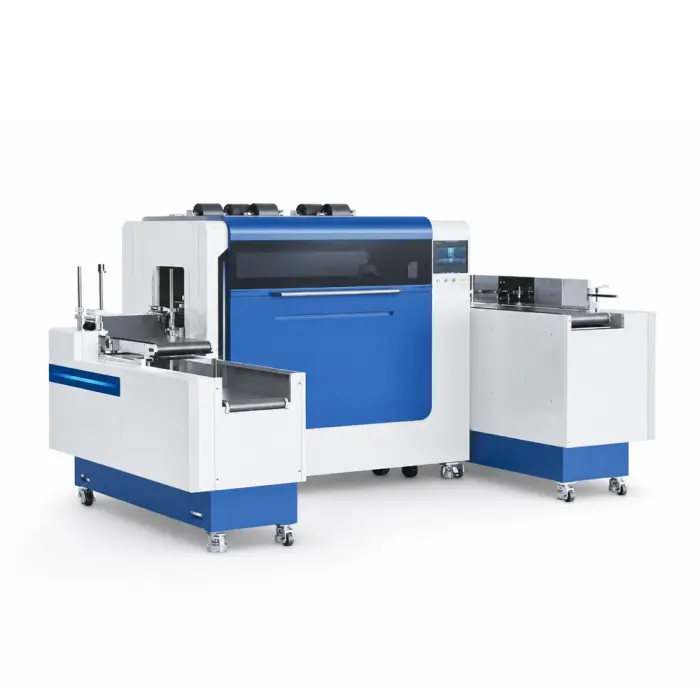
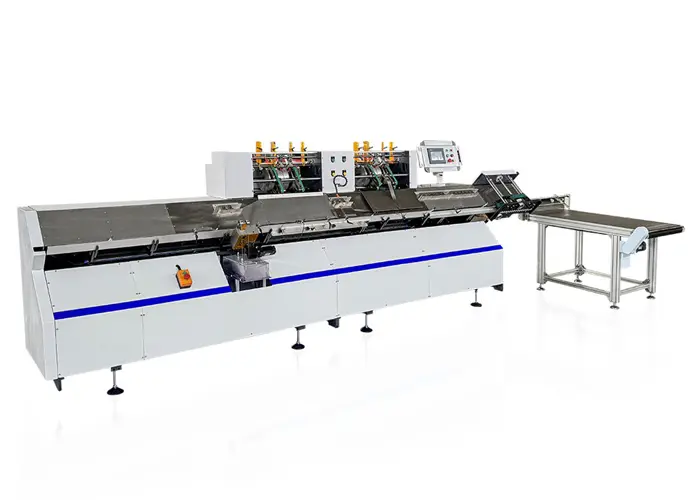
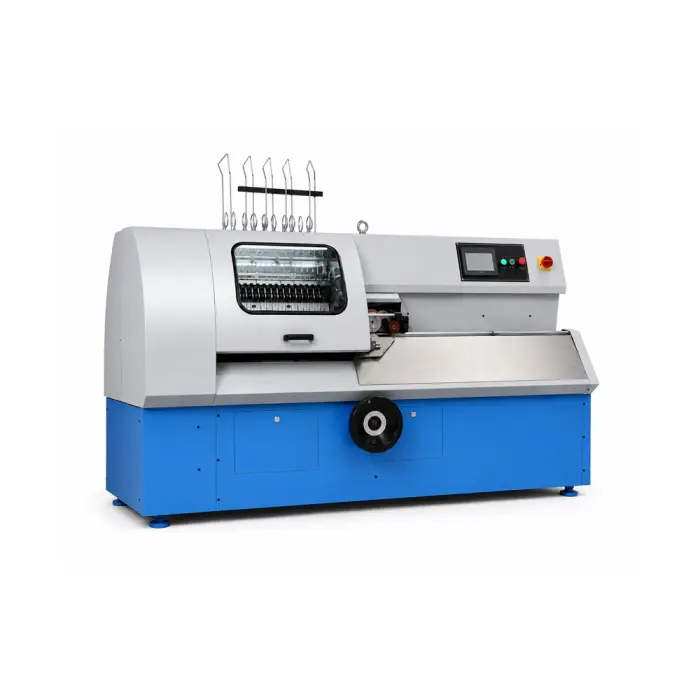
Fully automatic sewing lines dominate the conversation about throughput, but a large share of professional binderies still rely on semi-automatic thread sewing for short runs, mixed-format jobs and hardcover work where operator judgment matters. The real question is not automatic versus semi-automatic — it is which semi-automatic machine gives the best balance of speed, format flexibility, stitch precision and mechanical durability. This insight examines the HX460D Semi-Automatic Book Sewing Machine against the typical competitive profile of machines in its class, using only the specifications and configuration HXCP publishes for the model.
Speed and Format Range: The First Competitive Filter
The HX460D is rated at a sewing speed of 20–80 cycles/min in its specification table, with HXCP positioning the machine as delivering up to 90 sewing cycles per minute for efficient thread sewing of gathered signatures. Either way, the machine sits in the productive band expected of a professional semi-automatic sewer, and it reaches that band without asking the operator to pre-sort work by trim size.
That is where the format envelope becomes a genuine differentiator. The HX460D handles book sizes from 150 × 100 mm minimum to 460 × 320 mm maximum, and HXCP describes the working range as 150 × 80 mm to 460 × 320 mm, supporting versatile softcover and hardcover book production. In practical terms, a bindery can move from a small-format booklet to a large hardcover block on the same machine with the same needle configuration philosophy. Competitively, machines with a narrower maximum sewing size force larger-format work onto a second machine or out of the building entirely — a hidden cost that does not appear on a quotation sheet but does appear in scheduling.
Needle Configuration: Where Stitch Quality Is Decided
Stitch density and needle pitch are the two variables that separate acceptable thread sewing from binding that survives decades of opening and closing. The HX460D supports up to 14 sets of fine needles with a minimum needle pitch of 16 mm, enabling dense, precise stitching for professional bookbinding applications.
Compared with machines that offer fewer needle sets or a coarser minimum pitch, this configuration gives a bindery more room to match the sewing pattern to the signature — denser stitching where the spine demands it, without changing machines. For hardcover production in particular, the ability to run up to 14 needle sets on a machine that also accepts a 460 × 320 mm block is a meaningful competitive advantage, because it removes the compromise between format capacity and stitch refinement that buyers often accept without realizing it.
Automation Logic: Manual Loading, Automated Everything Else
The HX460D is deliberately semi-automatic, and the division of labor is clearly defined. The operator manually places the gathered signatures onto the feeding station; from that point the machine automatically performs signature feeding, thread sewing, thread cutting, counting and finished book block delivery.
This workflow is a competitive argument in itself. It keeps human judgment at the point where judgment is cheapest — loading and inspecting signatures — and removes human variability from the repetitive steps where errors accumulate. Counting is handled by the machine rather than by hand, and finished book blocks are delivered automatically, which reduces the handling that typically causes spine damage between sewing and the next production stage. Against competitors that automate feeding but leave counting or delivery to the operator, the HX460D closes more of the loop.
Intelligent Control and Fault Detection: The Downtime Argument
PLC control and a color touchscreen support operation, and photoelectric sensors monitor thread breakage, broken needles, thread-hooking failure, and missing or multiple signatures. The machine also uses variable-frequency drive and LED lighting as part of its control and operating configuration.
This is the area where semi-automatic machines most often diverge in real-world cost. A missed signature or a broken needle that is discovered ten books later turns into rework; a thread break detected at the moment it happens is a thirty-second correction. Because the HX460D monitors all four fault conditions — thread breakage, broken needles, thread-hooking failure, and missing or multiple signatures — the operator is alerted at the source rather than at inspection. Competitively, machines that rely on the operator to notice these conditions place the burden on attention span; the HX460D places it on sensors and a PLC.
Mechanical Construction: The Long-Term Cost Story
Specifications on a datasheet describe a machine on delivery day. A heat-treated, wear-resistant cam system, adjustable bearing rollers and centralized lubrication describe a machine five years later. These three elements work together to maintain accurate needle alignment, smooth operation and stable long-term performance.
Needle alignment is the quiet variable in sewing quality: as alignment drifts, stitch placement drifts with it, and the operator compensates with slower running or more frequent adjustment. A wear-resistant cam system resists that drift, adjustable bearing rollers allow the mechanism to be brought back to specification rather than replaced, and centralized lubrication reduces the maintenance burden on the operator. For a buyer comparing machines on price alone, this is the part of the comparison that is easiest to miss and most expensive to ignore.
The supporting numbers reinforce the industrial intent: motor power of 1.65 kW, a machine weight of 1100 kg, and dimensions of 2400 × 1450 × 1550 mm (L × W × H). This is a floor-standing production machine, not a light-duty unit, and its mass is part of why it holds alignment under continuous sewing.
How to Position the HX460D in a Competitive Evaluation
When binderies compare semi-automatic book sewing machines, the evaluation usually collapses into a single question about speed. A more useful framework weighs four factors against the job mix:
- Format coverage — does the machine span 150 × 100 mm to 460 × 320 mm, so short-run and large-format work stay on one machine?
- Stitch capability — does it offer up to 14 needle sets and a 16 mm minimum needle pitch for dense, precise sewing?
- Automation boundary — does it automate feeding, sewing, thread cutting, counting and book block delivery after manual loading?
- Fault visibility — does PLC control with photoelectric sensors catch thread breakage, broken needles, thread-hooking failure, and missing or multiple signatures?
On each of these axes, the HX460D's published specification and configuration give a bindery a defensible basis for comparison rather than a marketing claim. The machine is intended for high-quality thread sewing of gathered signatures across both softcover and hardcover production, and it is positioned as an efficient and reliable semi-automatic book sewing solution for professional bookbinding operations.
For binderies weighing a semi-automatic purchase against a fully automatic line, the honest conclusion is that the HX460D competes on fitness for purpose: it keeps the operator in the loop where judgment adds value, automates the steps where consistency matters, and builds in the mechanical durability and fault detection that determine what the machine costs to own rather than what it costs to buy.